
Song inspiration note:
Creative inspiration: Cages by NEEDTOBREATHE. This song is a recent addition to my playlist, but it landed right in the middle of something I was already trying to name: the way faith can become boxed, packaged, and controlled when it was never meant to be a cage. Hit play on the song and then read along here if you want an emotional journey into my wild mind.
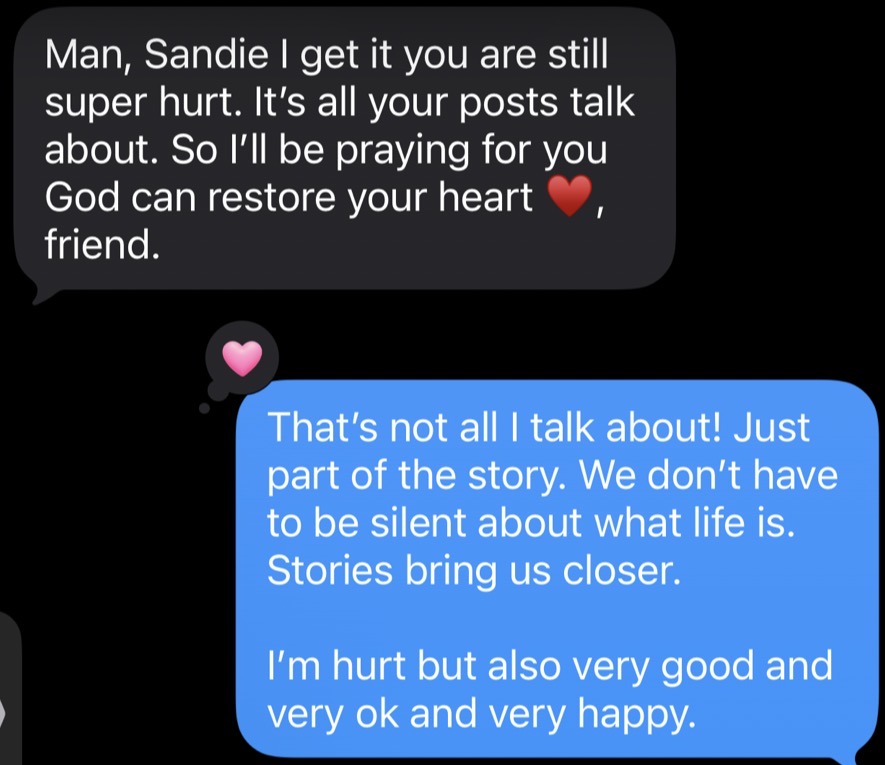
A close friend texted me after seeing one of my posts and said, “There were a lot of people affected when you guys left.” And I believe her. But that sentence also stopped me, because it named the part nobody seemed to know what to do with. People were affected when we left.
But we were affected by leaving. And somewhere inside that difference is the whole story. I was about to draft this post without inserting the personal story. But I think you need to hear it, because it gives backbone to what I’m trying to say. Because there is a kind of faith culture that only knows how to recognize someone’s walk with God when it comes packaged correctly.
Same church.
Same language.
Same rules.
Same leaders.
Same room.
Same approved version of healing.
As long as you stay wrapped up in the little box, people can call you faithful.
You can be struggling, exhausted, over-serving, spiritually confused, emotionally drained, and quietly disappearing inside yourself, but if you are still showing up in the right building and saying the right things, everyone knows what to do with you.
You are “growing.”
You are “serving.”
You are “submitted.”
You are “in community.”
But the second you step outside the box?
Suddenly your questions are dangerous.
Your healing looks suspicious.
Your grief is called offense.
Your clarity is called bitterness.
Your story is called gossip.
And your freedom starts making people nervous.
That is the part I cannot stop thinking about.
Because I was still me.
I did not become a different person the moment I stopped attending the same church. I did not lose my heart. I did not lose my faith. I did not lose God. I did not stop caring about people. I did not suddenly become unsafe, rebellious, deceived, or spiritually lost.
I was still me. I still am me. But I was no longer packaged in the box people knew how to approve.
When we were transitioning away from the church we had served in for years, I started posting about it. Not to burn anything down. Not to attack people. Not because I had no healing. I posted because writing has always been how I process what happened to me. It was therapeutic. It helped me put language to the parts of my life that had stopped making sense.
And then a close friend texted me. A real friend. Someone we had served with. Someone who loved us. Someone who was not fake. Someone I still believe cared.
She told me the relationships had mattered. She said the time we spent building our lives together was not fake. She said we made people better.
And I believed her.
I needed to hear that.
But in the same conversation, she also told me that the questions I was asking myself were Satan baiting me into believing lies.
There it was. The box.
Because from where she stood, my pain looked like spiritual danger. My questions looked like deception. My processing looked like brokenness. My storytelling looked like proof that I was still hurt and needed God to restore my heart.
And I need to be clear. I was hurt. Of course I was hurt. But hurt does not mean lost. Processing does not mean bitter. Telling the truth does not mean I am unhealed. Leaving does not mean I stopped loving God. And sharing what happened to me is not gossip simply because someone else would rather I stay quiet.
That conversation showed me something I have not been able to unsee. People wanted to honor those involved by not knowing what happened. But no one seemed to realize that refusing to hear my story also dishonored me. That is the part that gets missed in church culture over and over again.
Honor usually flows upward.
Protect the leader.
Protect the room.
Protect the reputation.
Protect the system.
Protect the version of the story that keeps everyone comfortable.
But what about honoring the people who left wounded?
What about honoring the people who served for years and then disappeared?
What about honoring the ones who were called family until they were no longer useful inside the structure?
What about honoring the friend in front of you enough to ask, “What happened to you?”
Not what did you hear.
Not what do the leaders say.
Not what protects the room.
What happened to you?
Because without that question, people are not walking beside you. They are standing at a distance, praying for a version of you they have already decided is broken.
And that is where I keep getting stuck.
Some people have such a strict, policy-based belief system that they cannot even entertain the idea that someone else’s faith might be real if it looks different from theirs.
More colorful.
More curious.
More honest.
More questioning.
More wide open.
Not faithless.
Just not theirs.
Faith is a journey. Marriage is a journey. Parenting is a journey. Healing is a journey. Becoming is a journey.
So when I hear people talk about grown children, spouses, friends, or people they love as if they are being “misled” simply because their path looks different, I want to ask:
Are they actually being misled? Or are they just not being controlled anymore? Because those are not the same thing. There is a difference between concern and control. There is a difference between wisdom and fear. There is a difference between walking beside someone and standing at the edge of their life with a clipboard, grading the route they took.
I do not think we were called to monitor each other into obedience. I think we were called to love each other into wholeness. And love does not require someone to walk the exact path you chose before you decide they are worth staying close to.
Especially as a mother, I think about this constantly.
I do not want to be so committed to being right that I become unavailable to my children. I do not want to be so afraid of their questions that I stop being a safe place for their honesty. I do not want to confuse their different path with rebellion just because it makes me uncomfortable. Because sometimes the most faithful thing we can do is stay near without needing to steer. To listen without correcting every sentence. To ask better questions. To trust that God is not so fragile that He disappears the second someone’s journey stops looking like ours.
Maybe walking alongside someone means we do not have to agree on every step. Maybe it means we find a stretch of road we can share for a while. Maybe it means we keep the conversation open instead of closing the door and calling it conviction.
I still believe in faith. I still believe in God. I still believe there is something holy about surrender, healing, truth, freedom, and love.
But I do not believe faith was meant to become a cage we lock people inside.
And I do not believe free will was given by God just so Christians could spend their lives trying to take it from each other.


Leave a comment