
Gemstones 11/30
Her house had a “just walk in” policy, which sounds sweet until you realize there were regularly twenty-four people inside and nobody had technically planned a party. She didn’t mind.
There were kids in every room, coffee going, somebody looking for a shoe, somebody else digging through toy bins, and at least one mom standing in the kitchen explaining her entire life while Diamond listened like she had nowhere else to be. She always had enough snacks, enough toys, enough chairs, enough patience, and somehow enough of herself.
The woman could host a small village on a Tuesday afternoon without acting like anybody inconvenienced her.
I found notes from September 11, 2018 where I had written that story down. I had been at her house earlier that day for a playdate. At some point, between kids running around, moms trying to finish a sentence, and somebody probably asking for a snack they did not need, I must have mentioned the week I was having.
Not because I wanted somebody to feel sorry for me. I was probably doing that thing where I acted fine while accidentally giving away that I was one mildly annoying inconvenience away from becoming feral. Later, she showed up at my door with taco soup.
No warning. No giant speech. No sad little voice asking if I was okay in a way that makes you suddenly want to pretend you are completely fine. She just paid attention, decided I needed food, and came over.
My kids loved it too, which probably mattered more than she knew. Hard weeks do not pause dinner. Kids still need things. Laundry still exists. Somebody still always needs the things only a mom can do. This is what makes the season of young kids feel so hard. You are tired all the time with no guarantee that you’ll get to make up that missed sleep. A friend bringing soup is not just soup. It is somebody saying, I saw you. I heard what you were not saying. You do not have to carry every part of today by yourself.
I had to let her see me first, though.
That was the part I wrote down back then. It was not magic. We had connected. We had exchanged numbers. We had spent enough time together for her to know the difference between my normal and my trying-to-act-normal.
When I got to Kennewick, I was rough. Tough. Angry more than I wanted to admit. I faked happy a lot. The real version of me kept trying to crawl out through the cracks, and she saw some of it. Raw mommy moments. Friend moments. Wife moments. The kind of stuff you think might make people back away.
She did not.
She just kept showing up enough times that I started believing I was worth showing up for too.
Our kids lined up in age in a weird, rare way where it felt like somebody assigned us to each other. We walked them to school. We did parks, playdates, and all the normal little things that fill a life when you are raising kids. One year, we made an absolutely ridiculous amount of tamales to help pay for a conference in Texas. Babies were strapped to backs. Kids were underfoot. There was more masa than any person should have to process in one lifetime.
We were supposed to be fundraising. Instead, we were building friendship over boiled chicken and laughter. Lots of laughter.
Her husband taught our family The World’s Most Downloaded Video Game, which became a part of our household identity. We are gamers, so it was not hard to get us interested, but I do not understand hardcore mode. I do not enjoy spending four hours collecting things only to die in a cave and lose everything. That is not character growth. That is rage.
She would probably tell me to calm down and start over. Or say – well at least you are all having fun playing together – that’s the whole point.
That steady way of hers showed up everywhere.
I remember standing in front of her house one day talking about youth group. I was deep in the season where I thought faith meant showing up every time the doors opened and as a youth leader I was so bothered that she didn’t send her teens to be there and do youth things with my teens. Show up. Show up on time. Show up on time and do your best. Show up on time and do your best for Jesus. I had been trained to believe that if a kid was not in the building on Wednesday night, somebody was doing something wrong.
I wanted them there because it was more fun when everybody showed up. I also thought it mattered enough that she should make them go. She did not get defensive. She did not argue. She just said she was not going to make them go if they did not want to. Faith should be something they wanted. At the time, I thought she was being too relaxed. Years later, I realized she had wisdom I did not have yet.
You cannot force faith into somebody by making them sit in a room. You cannot manufacture love for God by making sure a teenager occupies a chair in the right building. You can offer. You can model. You can make room. You can leave the door open.
That was always her thing.
There is a running joke because she almost never raises her voice. One day, a kid was hanging on one of her trees, and she opened the window and yelled, “Hey! Stop hanging on my tree!”
Not mean. Not scary. Just direct enough that we all remember it years later because apparently it takes a child dangling from a branch to get her to raise her voice.
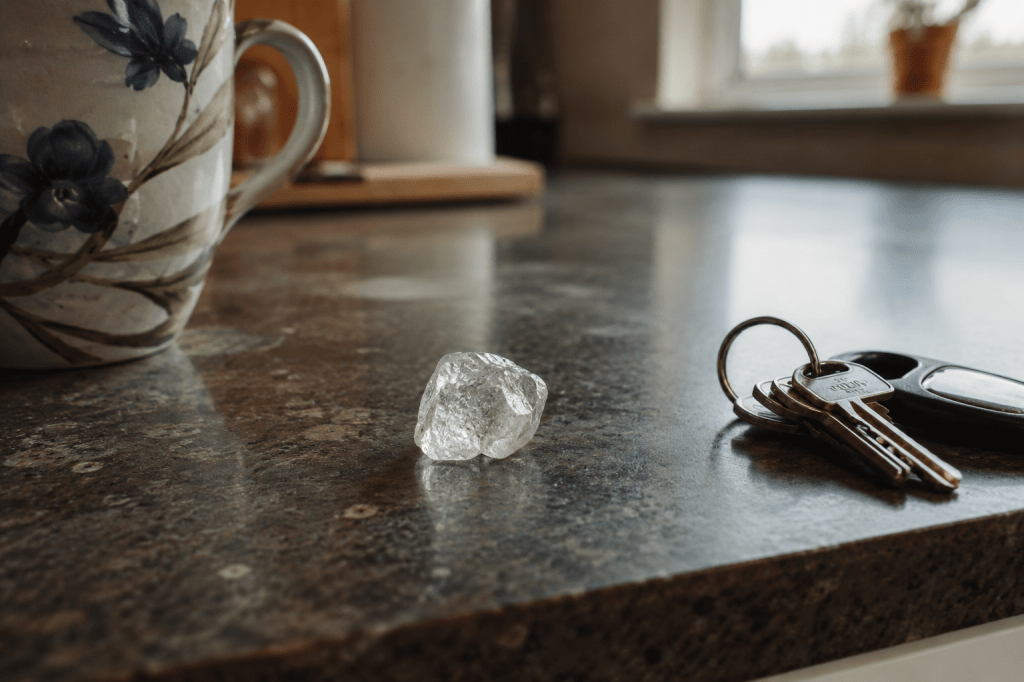
In Minecraft, diamonds are buried deep. They are not sitting at the surface trying to get your attention. You have to go past the easy stuff. Past the lava. Past the water. Past the places that make you wonder why you started mining in the first place.
Diamonds become armor and tools. They help you survive the harder parts of the game. They help you build what you could not build before.
This is why her gemstone is Diamond.
The best parts of her have always lived in real-life places.
Most of the friends in this series who are still there will not get a song. That was a line I drew early because I did not want to write around things that still feel complicated or pretend every relationship survived the same way.
This one is different.
She is still there, but she never handed that place the deepest parts of herself the way I did. She never confused showing up with belonging, or loyalty with losing her own voice. She kept her faith. She kept her family. She kept her kindness.
Nothing got awkward when we left. It never really was.
I could be upset. I could be loud. I could say the messy parts out loud in the very direct way I tend to do, and she stayed exactly who she had always been.
Kind. Steady. Open.
That is why she gets a song.
Not because she stayed.
Because she stayed herself.
“Ordinary” by Alex Warren. I picked “Ordinary” because it feels like the kind of love she carries: the kind that does not need a spotlight to be real. She has always had a way of making people feel held without making them feel handled. Her care is quiet, solid, and deeply personal. The kind that changes a life without needing credit for it. That is not ordinary at all.




Leave a comment